In recent years, there has been a growing interest in identifying natural and scientifically validated strategies to support brain health. Among the options studied, saffron (Crocus sativus L.) has emerged as a promising candidate. Traditionally valued for its culinary use and vibrant color, saffron is now recognized for its bioactive compounds that may positively influence cognitive function and emotional well-being.
This article provides an evidence-based overview of saffron’s role as a dietary supplement for brain health, with a focus on its mechanisms of action and clinical relevance.
What is saffron and how is it used as a supplement?
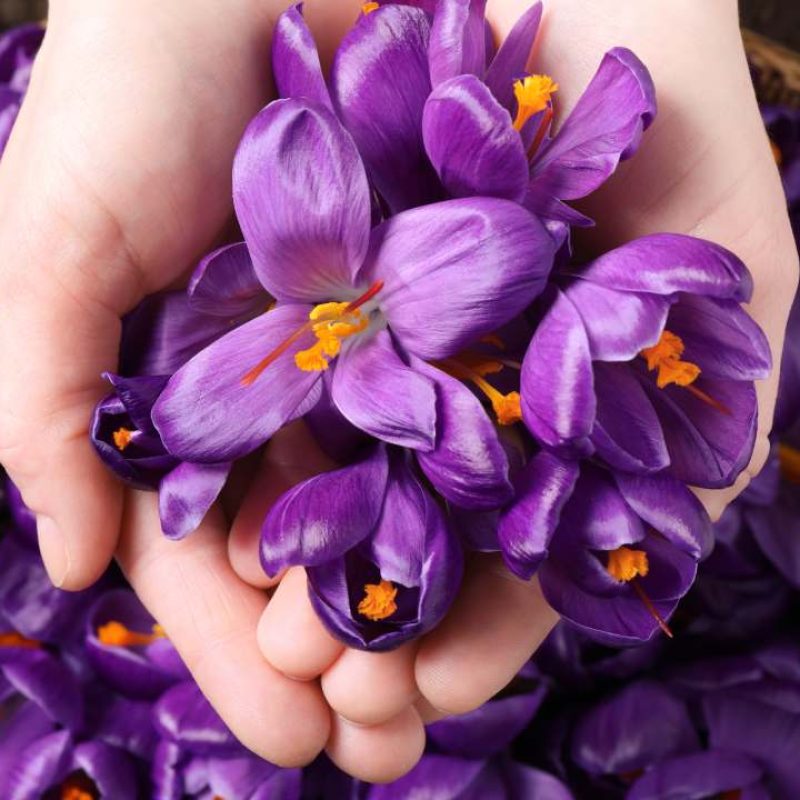
Saffron is derived from the dried stigmas of the Crocus sativus flower. Its principal active constituents—crocin, crocetin, safranal, and picrocrocin—contribute not only to its sensory properties but also to its pharmacological profile. These compounds exhibit antioxidant, anti-inflammatory, neuroprotective, and mood-enhancing effects.
Commercial saffron extracts, such as SAFFR’ACTIV®, are designed to provide consistent concentrations of these bioactive ingredients. This approach supports reproducibility in clinical outcomes and contributes to consumer safety and product reliability.
The use of saffron in traditional medical systems such as Ayurveda and Traditional Chinese Medicine dates back centuries. In modern clinical settings, its efficacy is increasingly supported by controlled studies focusing on mental disorders, cognitive decline, and neurological resilience.
Scientific evidence on saffron and brain health
Cognitive function & memory
Numerous preclinical and clinical studies suggest that saffron may play a role in improving memory and cognitive performance. Crocin’s, one of saffron’s key carotenoids, has been shown to support synaptic plasticity and long-term potentiation—processes essential for learning and memory.
According to Bian et al. (2020)1, saffron demonstrated inhibitory effects on amyloid-beta aggregation in models of Alzheimer’s disease and was associated with improved behavioral and cognitive parameters. These findings are partially attributed to its antioxidant and anti-inflammatory capacity.
Furthermore, crocetin and safranal have shown the ability to cross the blood-brain barrier and exert neuroprotective effects, highlighting their relevance for interventions in neurodegenerative conditions.
Mood, stress, and neurodegeneration
Saffron’s influence on emotional well-being is well-documented. It appears to modulate serotonin, dopamine, and norepinephrine activity, which are critical in the pathophysiology of mood disorders. Its anti-inflammatory and antioxidative properties also contribute to its antidepressant and anxiolytic potential.
Cerdá-Bernad et al. (2022)2 reviewed multiple randomized controlled trials demonstrating that saffron supplementation was effective in alleviating symptoms of depression and anxiety. These studies also reported benefits in sleep quality and cognitive function, especially in individuals with mild cognitive impairment.
In head-to-head comparisons with medications such as fluoxetine and imipramine, saffron showed comparable efficacy in reducing depressive symptoms while presenting a favorable side effect profile.
Mechanisms of action
Saffron exerts its neurological benefits through several complementary pathways:
- Antioxidant activity: Reduces oxidative stress and protects neuronal cells.
- Anti-inflammatory effects: Attenuates neuroinflammatory responses.
- Neurotransmitter modulation: Enhances levels of serotonin and dopamine.
- Neurotrophic support: Stimulates BDNF expression, supporting neurogenesis.
- Amyloid-beta regulation: Inhibits the formation and accumulation of amyloid plaques.
These mechanisms provide a broad therapeutic profile, positioning saffron as a multifunctional agent in brain health maintenance
Comparative advantages of saffron
Saffron offers a range of advantages over other brain health supplements:
- Broad-spectrum action: Addresses both cognitive and emotional aspects.
- Clinical validation: Supported by multiple human trials.
- Tolerability: Low incidence of adverse effects.
- Botanical origin: Sourced from a traditional medicinal plant with contemporary relevance.
Products like SAFFR’ACTIV® are formulated to ensure consistent levels of key bioactive compounds. This precise dosage is critical for achieving therapeutic benefits and ensuring product integrity.
SAFFR’ACTIV®, a standardized saffron extract
SAFFR’ACTIV® is a saffron extract specifically designed for cognitive and emotional health. It is formulated for its crocin and safranal content, based on current scientific understanding of these compounds’ efficacy.
Its formulation is subject to rigorous quality controls and traceability measures that adhere to internationally recognized guidelines. Distributed in over 25 countries, SAFFR’ACTIV® reflects a commitment to quality and research-based development.
Practical guidelines for use
- Dosage: Commonly studied doses range from 30 to 100 mg/day.
- Form: Several possible galenic forms to bring a complete answer to customers.
- Administration: Can be taken with or without food.
- Combination: May be used in conjunction with nutrients like omega-3 or B-complex vitamins.
Recommendations for optimal outcomes
To maximize the benefits of saffron supplementation, consider the following best practices:
- Consistency: Take the supplement daily, ideally at the same time each day, to maintain stable blood levels of active compounds.
- Duration: Use the supplement for at least 6–8 weeks to observe measurable improvements in cognitive function or mood.
- Lifestyle integration: Support supplementation with a brain-healthy lifestyle that includes a balanced diet rich in antioxidants, regular physical activity, quality sleep, and cognitive stimulation.
- Monitoring: Track any changes in mood, focus, memory, or sleep quality to better assess the individual response.
- Medical guidance: Speak to a healthcare professional before starting saffron supplementation, especially if you are pregnant, nursing, or taking medication for mood disorders or neurological conditions. Saffron is not recommended for pregnant and nursing women.
Frequently asked questions
Is saffron safe for long-term use?
Yes. Clinical trials report good tolerability over extended use periods.
What is the typical dosage?
30 mg/day of a extract is commonly used in clinical studies.
How long before benefits are noticeable?
Most users report improvements within 4 to 6 weeks of consistent use.
Are there known side effects or interactions?
Mild effects such as nausea may occur at high doses. Caution is advised when combining with serotonergic drugs.
Can saffron support both memory and mental health?
Yes. Evidence supports benefits in both cognitive and emotional domains.
What distinguishes SAFFR’ACTIV® from other products?
SAFFR’ACTIV® is a standardized extract developed with quality assurance procedures and scientific validation, ensuring reliability and efficacy.
References
1 Bian Y, Zhao C, Lee SM. Neuroprotective Potency of Saffron Against Neuropsychiatric Diseases, Neurodegenerative Diseases, and Other Brain Disorders: From Bench to Bedside. Front Pharmacol. 2020 Oct 6;11:579052. doi: 10.3389/fphar.2020.579052. PMID: 33117172; PMCID: PMC7573929.
2 Cerdá-Bernad D, Costa L, Serra AT, Bronze MR, Valero-Cases E, Pérez-Llamas F, Candela ME, Arnao MB, Barberán FT, Villalba RG, García-Conesa MT, Frutos MJ. Saffron against Neuro-Cognitive Disorders: An Overview of Its Main Bioactive Compounds, Their Metabolic Fate and Potential Mechanisms of Neurological Protection. Nutrients. 2022 Dec 17;14(24):5368. doi: 10.3390/nu14245368. PMID: 36558528; PMCID: PMC9781906.